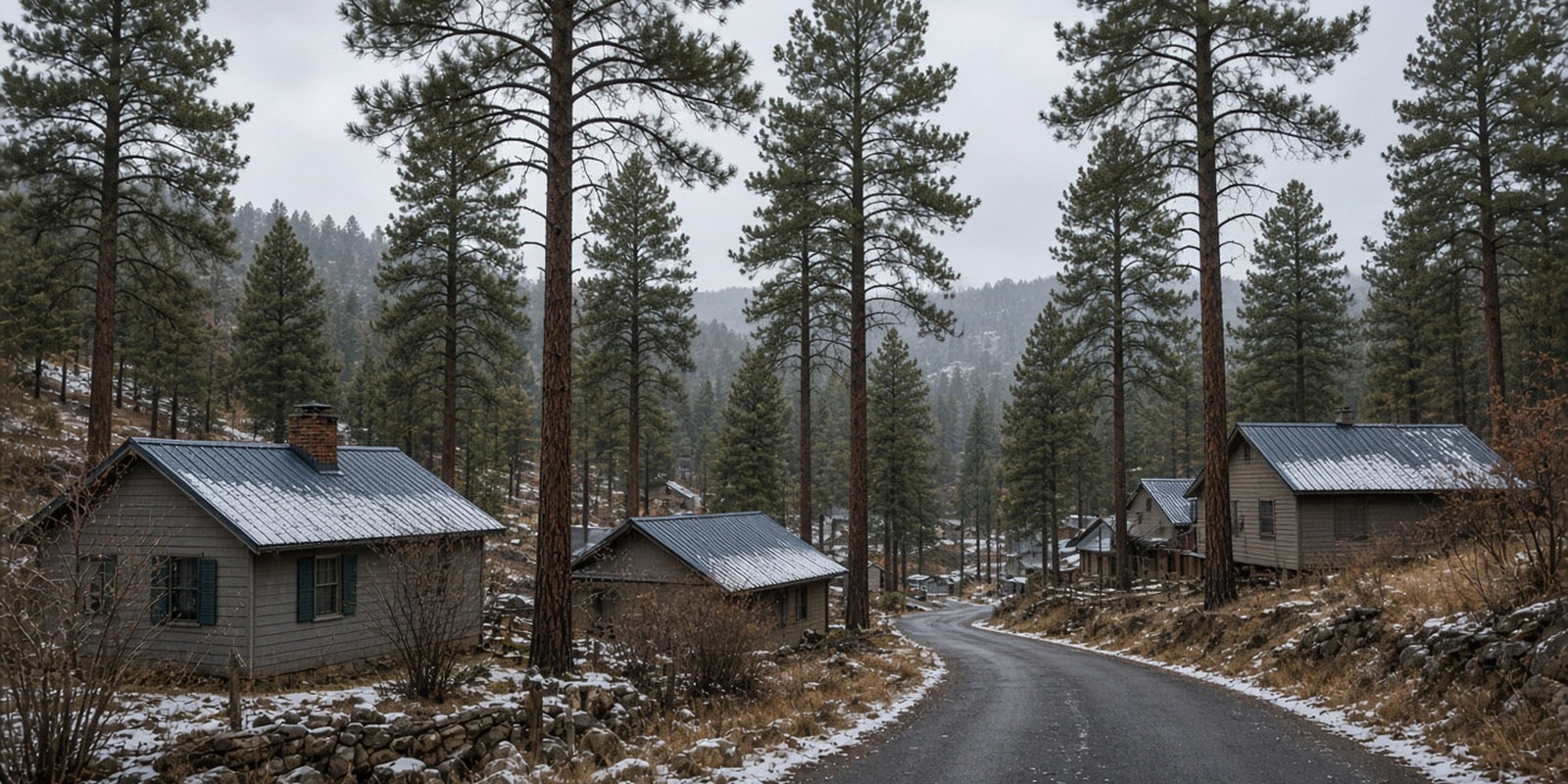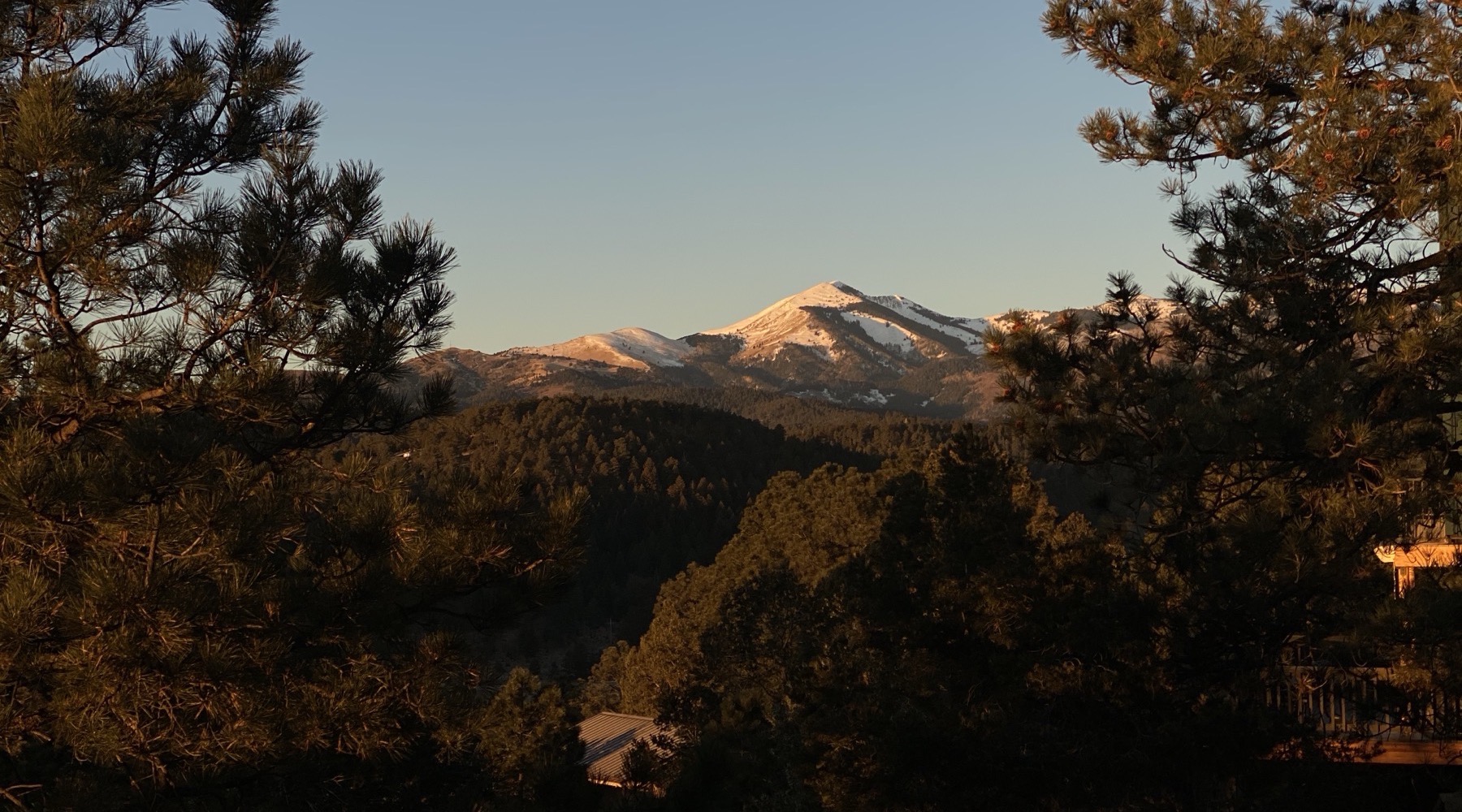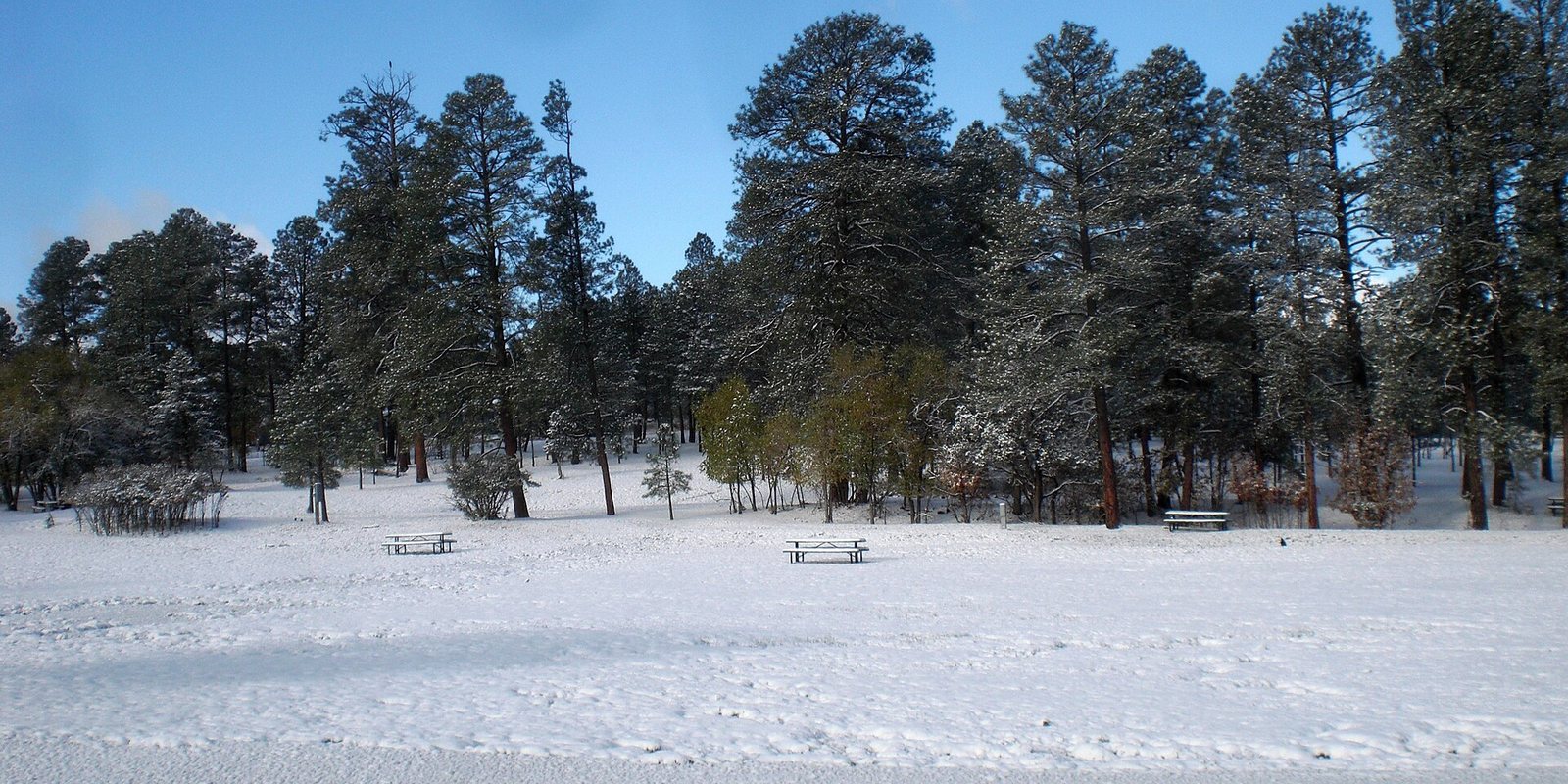
A burst pipe in a Ruidoso cabin that nobody is living in is usually handled by the homeowners policy as a sudden water loss, but the policy typically attaches a condition: that heat was maintained in the building, or the water was shut off and the plumbing drained. That condition is where most frozen-pipe disputes start, and an empty cabin is where it is hardest to prove. Policies vary on this more than people expect, and yours is the one that answers it.
Here is what Ruidoso’s winter looks like, and how the freezing language usually works.
How cold does Ruidoso actually get?
The Ruidoso station sits at about 6,900 feet. NOAA’s 1991–2020 normals, the most recent set, show the overnight low reaching 32 degrees or colder on about 27 nights in December and about 27 in January. February averages about 24, and March about 23. Add up December, January and February and the lows hit 10 degrees or colder on roughly eight nights in a typical winter.
The same record carries the harder number. The station’s lowest daily minimum is minus 27 degrees, on February 3, 2011. That record runs from 1941 to early 2014 in NOAA’s daily file, so it is the record for that span, not a statement about every night since.
The finding that matters for an owner who is away: freezing nights are not a January event here. At this station the average count is above 11 in October and above 23 in November. A cabin closed up for the long weekend after Thanksgiving is already in the stretch where a night below freezing is the norm.
How do policies typically handle a burst pipe?
The National Association of Insurance Commissioners (NAIC) explains that homeowners policies typically cover damage from a “sudden and accidental” discharge from a plumbing system, and that the damage may not be paid if the insurer determines the owner neglected the plumbing by not taking steps to prevent freezing. Policies generally require maintaining a minimum temperature, or shutting off the water supply, if the home is vacant.
On many standard forms the wording is an either/or: the freezing exclusion does not apply if reasonable care was used to keep heat on in the building, or to shut off the water and drain the systems and appliances. Some insurers write the exclusion more narrowly, so it applies only while the dwelling is vacant, unoccupied or under construction. Those words are not always defined, and a furnished second home that sits empty all winter is exactly the situation where they come up.
What does “maintaining heat” mean in a cabin nobody is in?
That is the question worth asking before the first hard freeze. A thermostat set low, propane or electric service that is current, and a power supply that can fail are all part of it. A wood stove is how many Lincoln County homes heat, as our post on wood stove season in Lincoln County shows, but a stove cannot feed itself while the owner is in another state. Whether a particular heat source counts as maintaining heat in an empty home is a policy-wording question, not a general rule.
Shutting off and draining the pipes is the other path on the standard wording. Some policies name a minimum temperature. Others leave “reasonable care” undefined.
The wrinkle most people miss
Two things catch second-home owners off guard.
The vacancy clock. Many policies also contain a separate vacancy provision, often counted in consecutive days, that limits certain kinds of losses when a home has been vacant long enough. It may not be about freezing at all, but it shows how a long absence can narrow a policy. Our post on seasonal homes in Ruidoso looks at how many homes in the county are used part of the year.
Who sees it first. A leak in an occupied house shows up in a day. In an empty cabin it can run for weeks before a neighbor notices, which is one more reason the question of who checks the place deserves an answer before winter.
What to look at on your own policy
Find the freezing language and read both halves: what it says about heat, and what it says about shutting off and draining the water. Look for any wording about vacant or unoccupied dwellings, and note whether those terms are defined. Your policy is the thing that answers this.
If you own a cabin in Ruidoso, Alto or Cloudcroft that sits empty part of the year, our home and property page is a place to start. You can also call (575) 434-2719 or start a quote, and we will go through your declarations page with you.
This article is general information about how coverage typically works, not advice about your specific situation. Every policy reads a little differently, and yours is the only thing that says what you have. If you’d like someone to read it with you, call our Sudderth Drive office — that’s what we’re here for.