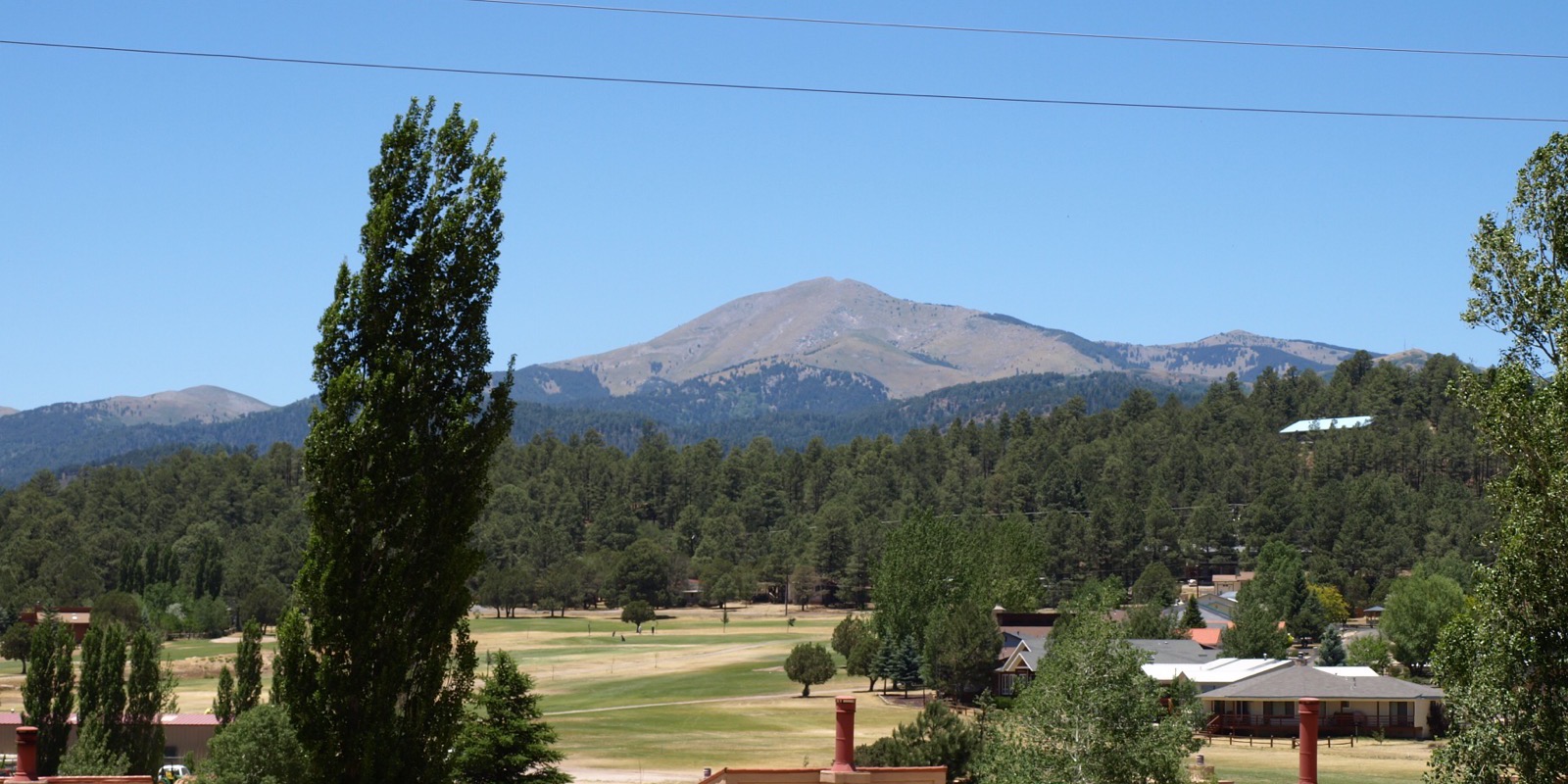
Almost half the houses in Ruidoso are not anyone’s full-time home. The Census Bureau’s latest five-year survey counts about 3,608 of the village’s 8,294 housing units as held for seasonal, recreational or occasional use. That is 43.5 percent. Across New Mexico the figure is 3.8 percent. For insurance, that number matters, because an insurer reads a house that sits empty for weeks very differently from one with someone sleeping in it every night.
How far out of the ordinary is our county?
Lincoln County as a whole comes in at 33.6 percent seasonal homes, about one in three. Otero County, with Cloudcroft’s cabins balanced against Alamogordo’s full-time neighborhoods, sits at 11.1 percent. The state is under 4 percent.
Put plainly, a house in our county is nearly nine times as likely as the average New Mexico house to be a second home. Many of them belong to families from El Paso, Lubbock, Midland and Albuquerque who come up for summer, race season at Ruidoso Downs, or a week of skiing at Ski Apache.
A note on the numbers: these are survey estimates averaged over 2020 through 2024, and the Census publishes a margin of error with each one. The direction is not in doubt. The decimal point is.
Why does an empty house change the insurance picture?
Here is the finding that does not flatter anyone, including us: a home nobody is watching is a harder risk to insure, and our county has a lot of them.
The reasons are practical. A supply line that splits in January runs for days before anyone notices instead of minutes. A small roof leak during the monsoon soaks a ceiling for a month. A break-in at a cabin up a dirt road may not be found until spring. None of those losses are rare. What makes them expensive is time, and an empty house gives them time.
That is why most homeowners policies are written around the idea that the home is someone’s residence. Many standard forms include language that limits certain coverages once a home has been vacant or unoccupied for a stated stretch, often 30 or 60 consecutive days, and policies vary on how they define each word. Some second homes are written on a dwelling fire form instead, which typically works differently from a full homeowners policy on contents, liability and theft. Policies vary on this more than people expect, and your own declarations page and the vacancy wording inside it are the things that answer it.
Why does the application ask so many occupancy questions?
If you have tried to insure a cabin here lately, you have probably been asked how many months a year someone stays there, whether anyone checks on it, whether the water is shut off in winter, and whether it is ever rented. Those questions are not busywork. Each answer changes which kind of policy fits the house, and an answer that turns out to be wrong after a loss is one of the hardest conversations in this business.
The habits that make an empty house a better risk are the same ones a careful owner already keeps: someone local with a key who checks after a storm, water shut off and lines drained before the first hard freeze, a thermostat set above freezing, and a monitored alarm or a water sensor that sends an alert. Those details belong on the application, because they are part of the story the underwriter reads.
What this means for Ruidoso
We are a mountain agency, and a big share of the homes we are asked about are second homes. That is not a problem to hide from. It is the reason the paperwork asks what it asks.
If your cabin in Ruidoso, Alto or the Upper Canyon sits empty part of the year, look at our home and property coverage, then call our office at (575) 434-2719 or start a quote. Bring your current declarations page and we will read the occupancy wording with you. For more on how the market looks at mountain homes right now, see Can You Still Get Home Insurance in Ruidoso?
This article is general information about how coverage typically works, not advice about your specific situation. Every policy reads a little differently, and yours is the only thing that says what you have. If you’d like someone to read it with you, call our Sudderth Drive office — that’s what we’re here for.