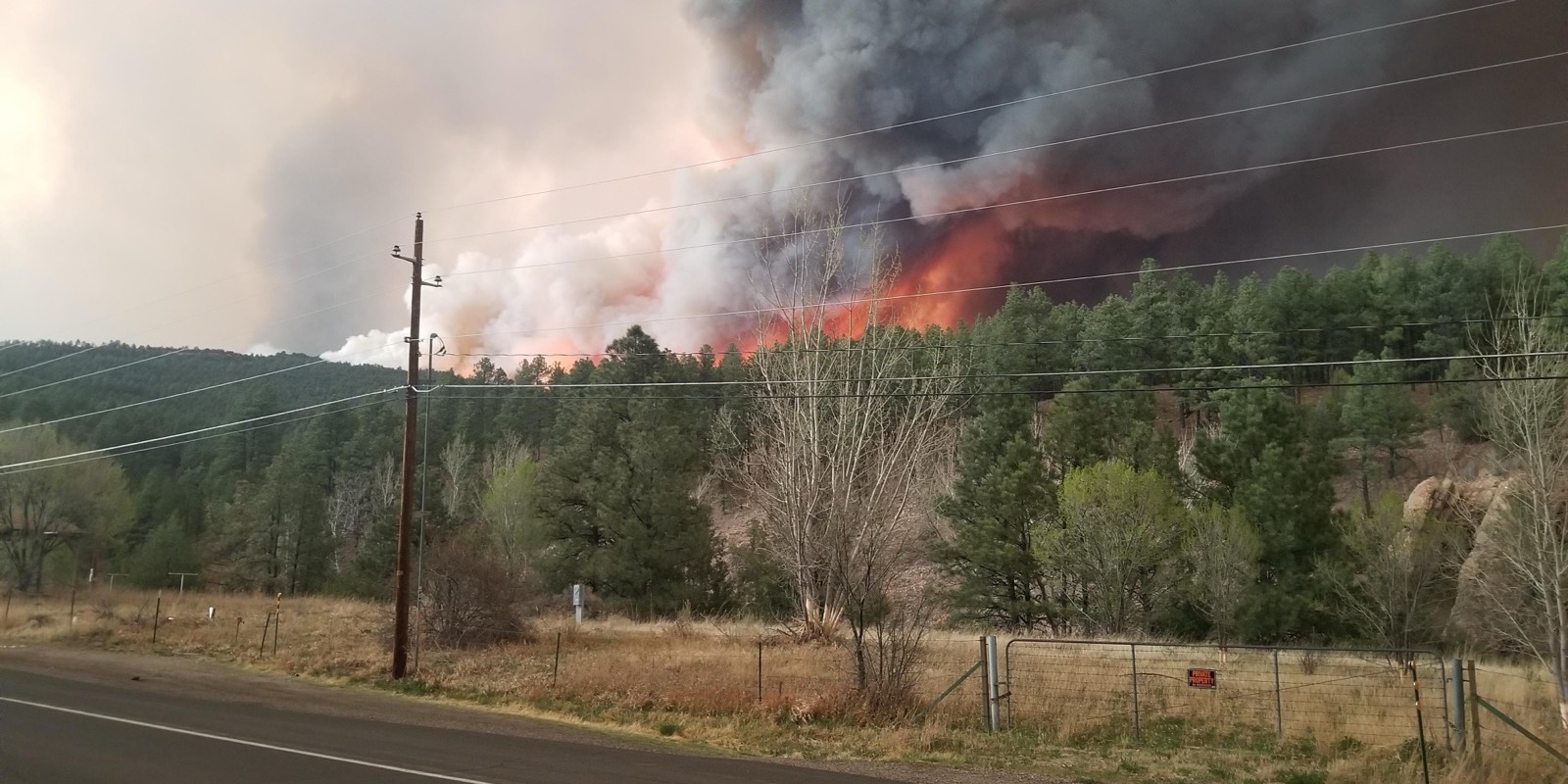
Yes, in most cases. Fire is typically a covered peril on a standard homeowners policy, and wildfire is fire. The Insurance Information Institute says damage from fire and smoke is handled under standard homeowners policies, and so is water damage from firefighters putting the fire out. In the Sacramento Mountains, though, that is rarely the question that keeps people up at night. The harder questions are getting a policy, keeping it at renewal, and carrying limits high enough to actually rebuild.
Which parts of a homeowners policy respond to a wildfire?
A standard homeowners policy is a bundle of separate coverages, and a wildfire can touch several at once:
- Dwelling. The house itself. The Institute’s homeowners handbook describes this part as paying to repair or rebuild a home damaged or destroyed by fire and the other disasters a policy lists.
- Other structures. Detached garages, sheds, and fences.
- Personal property. What is inside the house.
- Loss of use. The extra cost of living somewhere else while a damaged home is repaired. Our post on loss of use coverage covers how evacuation orders usually differ from damage.
Each part has its own limit. A policy can respond to a wildfire and still fall short if one of those limits was set too low.
What about smoke damage?
Smoke is part of the same picture. The Institute groups fire and smoke damage together under standard homeowners policies. Smoke claims tend to turn on the details, such as how far the smoke traveled and what it actually damaged, and policies vary on this more than people expect.
If fire is typically included, what is the real problem?
Getting and keeping the policy. New Mexico’s Office of Superintendent of Insurance counted over 10,000 homeowners non-renewals from the top 10 insurers between January 2021 and July 2024. It also cites a Consumer Federation of America estimate that 13 percent of New Mexico properties are uninsured, second highest in the country. FEMA’s National Risk Index gives Lincoln County a wildfire risk score of 98.76 out of 100.
That is why so many homes here end up in one of three kinds of market: a standard carrier, a surplus lines company, or the New Mexico FAIR Plan, the state’s coverage of last resort. The state raised the FAIR Plan’s maximum residential limit from $350,000 to $750,000. If a non-renewal letter has already arrived, our post on what happens after a New Mexico non-renewal walks through the timeline.
Timing matters too. When a fire is burning nearby, carriers typically stop binding new coverage in the area until it is contained. Our post on catastrophe binding restrictions explains how that works. The practical point is simple: the time to sort out a policy is before smoke is in the air.
Is the limit high enough to rebuild?
The dwelling limit is meant to reflect what it costs to rebuild, not what the house would sell for. The Institute’s handbook notes that after a major wildfire, construction costs can jump as many homes rebuild at once. Some policies offer extended replacement cost, which typically adds a percentage above the dwelling limit, where available. Whether yours does is written on the declarations page.
Common questions
Does it matter whether the fire started on my property?
On most standard forms, fire is fire whether it started in the national forest, a neighbor’s yard, or the house itself. Policies vary, and exclusions such as intentional acts are their own topic.
Does a FAIR Plan policy work the same way?
The FAIR Plan is a separate market with its own policy forms and limits. Reading its declarations page side by side with a standard policy is the clearest way to see the differences.
Your policy is the thing that answers this for your home. If you’d like us to read it with you, see our home and property page, start a quote, call (575) 434-2719, or bring your declarations page or a non-renewal letter to the office. We read these with homeowners from Alto to Cloudcroft.
This article is general information about how coverage typically works, not advice about your specific situation. Every policy reads a little differently, and yours is the only thing that says what you have. If you’d like someone to read it with you, call our Sudderth Drive office — that’s what we’re here for.