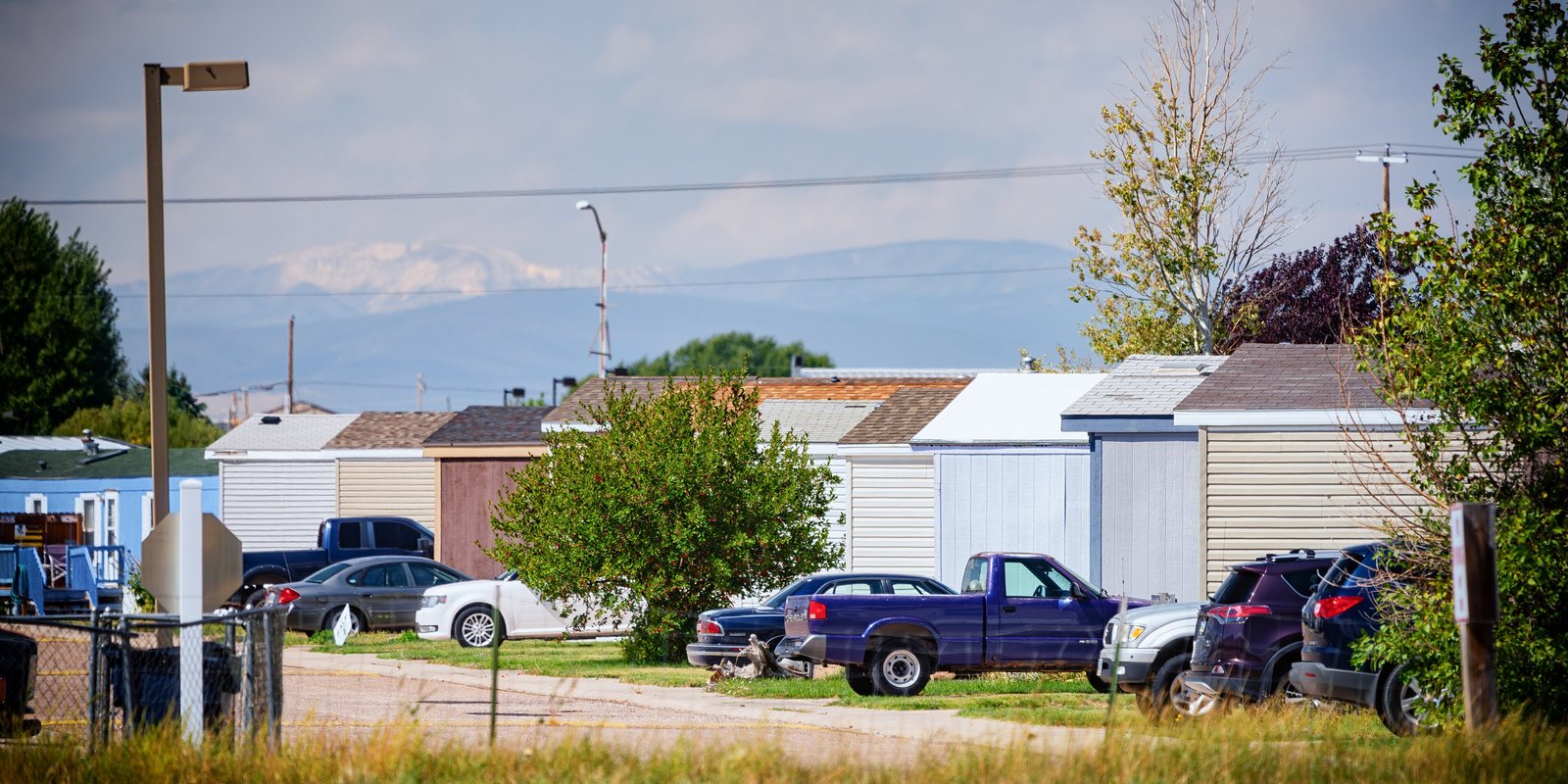
About one home in four in Lincoln County is a mobile or manufactured home, and in Otero County it is closer to three in ten. That is far above the state and national share. It also means a lot of our neighbors are insuring a kind of home that policies handle differently from a site-built house. The finding that matters most for insurance is age: most of these homes were built before 2000, and the year on the HUD label shapes how a policy is likely to be written.
What does the Census count show?
The Census Bureau’s American Community Survey, 2020–2024 five-year estimates, table B25024, counts housing units by type of structure:
- Lincoln County: 4,352 mobile homes out of 17,871 housing units, or 24.4%
- Otero County: 9,472 out of 32,645, or 29.0%
- New Mexico: 15.5%
- United States: 5.6%
Town by town, the picture changes fast. Mobile homes make up an estimated 62% of housing in Capitan and 59% in Ruidoso Downs. Tularosa comes in around 38%. Alamogordo and the Village of Ruidoso are both near 16%, and Cloudcroft is about 4%. The town figures come from small samples. Capitan’s estimate of 480 mobile homes carries a margin of error of plus or minus 156, so read them as a rough shape, not a precise count.
How old are these homes?
This is the unflattering part. Table B25127 sorts occupied homes by the year they were built. It lumps mobile homes together with boats, RVs, and vans, but in both counties that last group is tiny next to the mobile home count.
In Lincoln County, about 1,888 of roughly 2,845 occupied homes in that category were built before 2000, about 66%. Around 26% were built before 1980. In Otero County, about 73% were built before 2000, and around 22% before 1980.
The 1980 line matters because of a federal date. National construction standards for manufactured homes, known as the HUD Code, apply to homes that entered production on or after June 15, 1976, according to federal regulations. Homes built before that date were not built to the federal standard, and the Census bracket for 1960 to 1979 straddles it.
One more number stands out. Lincoln County has 4,352 mobile homes in total but at most about 2,845 occupied ones, which means at least a third were not anyone’s usual residence when surveyed. Some are seasonal, some are for sale, and some sit empty.
What is the risk picture here?
FEMA’s National Risk Index, December 2025 release, gives Lincoln County a wildfire risk score of 98.76 and Otero County 98.16, both rated Relatively High. Strong wind rates lower: Very Low for Lincoln and Relatively Low for Otero. Wildfire is the hazard that dominates, and our post on Otero County’s wildfire score explains how that index works.
How do manufactured home policies typically differ?
Policies vary on this more than people expect, but a few patterns show up often:
- Year and label. Most applications ask the year built and whether the home carries a HUD label. Homes built before the federal standard took effect can draw extra questions.
- Anchoring. How the home is tied down and set on its foundation is a common underwriting question.
- Roof and skirting. Roof age and material come up, as they do on a site-built home, and so does skirting.
- Settlement basis. Some manufactured home policies, particularly on older homes, are written at actual cash value, which subtracts depreciation, rather than replacement cost. That difference matters most after a total loss.
- Land and lot. Whether the home sits on owned land or a rented lot can change what the policy needs to address.
- Vacancy. Homes that sit empty often carry vacancy conditions, which matters given how many here are not lived in year-round.
Our post on why a mountain home quote asks so many questions covers why those details come up. Your policy is the thing that answers how your own home is written.
If you’d like us to look at it with you, see our home and property page, start a quote, or call (575) 434-2719. We work with manufactured home owners from Capitan and Ruidoso Downs to Tularosa and Alamogordo.
This article is general information about how coverage typically works, not advice about your specific situation. Every policy reads a little differently, and yours is the only thing that says what you have. If you’d like someone to read it with you, call our Sudderth Drive office — that’s what we’re here for.